July 12, 2026
What It's Like Shooting A Music Festival
People see the final photos and videos from a festival weekend and assume it's three fun days of good music and good lighting. What they don't see is the system running underneath it: the editing, the approvals, the real-time deadlines, and the strategy that goes into making a festival's content actually work for the people who booked you.
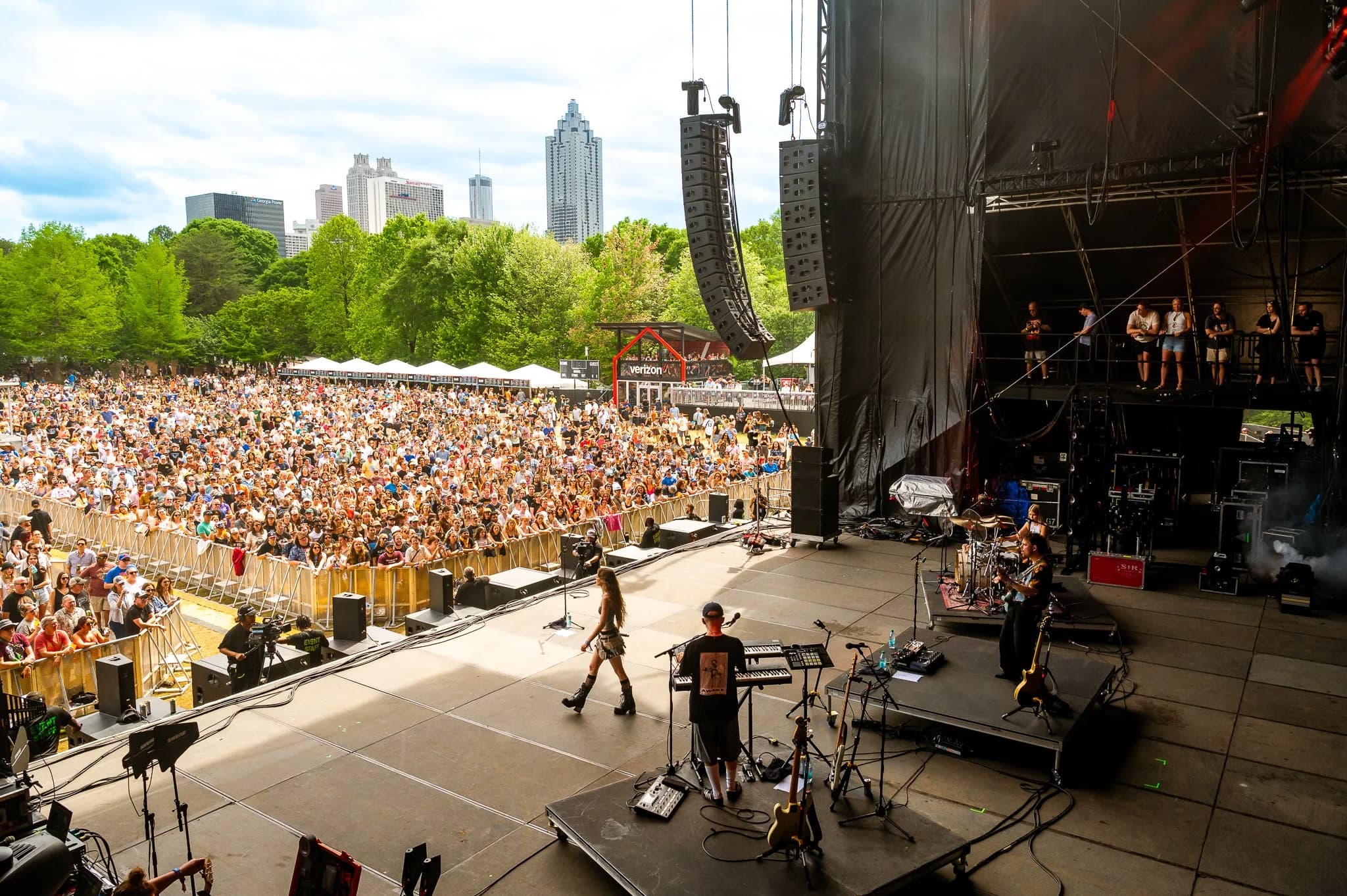
I was part of the official media team for Shaky Knees Music Festival in Atlanta, and here's what that job actually looks like.
The Day Doesn't Start When You Think It Does
Most days started around 10 or 11 am, but the work had already begun the night before. I'd go home after each night of the festival and start editing right away, because the team needed content fast, not the next week.
By the time I walked back into the media room the next morning, I was being debriefed: what content we already had, what we were still missing, and what had changed overnight. Artist lineups shift. Sponsor needs shift. Sometimes a marketing team realizes they need more shots of a specific activation, or an artist's team flags a request that didn't come through until that morning. Every day started with a reset, not a routine.
Before any set, I coordinated with the media, marketing, and artist teams to find out if there were any notes I needed going into that performance. Some artists work with their own tour photographer and want the festival media team to stay hands-off. Some have specific restrictions: front of house only, stage left only, first three songs and no all-access after that. Every artist is a different set of rules, and getting it wrong isn't just a bad shot. It's a problem for the festival's relationship with that artist's management.
Real-Time Editing Is The Job
Here's what surprises people most: we weren't editing at the end of the day. We were editing on the hour, all day long.
The moment an artist finished their set, the job became picking the top 5 to 10 images from that performance and getting them to the social and marketing team as fast as possible. That meant reviewing hundreds of frames, choosing the strongest ones, editing them on the spot, and notifying the team the second they were uploaded so they could track everything and credit the right photographer on each post.
Then it was on to the next task. Sometimes that meant hustling from the farthest stage on the grounds back to the media tent to edit before the next set started. Sometimes it meant switching gears entirely to capture something outside of the artist lineup altogether.
It's Never Just About The Artists
A festival isn't only selling its lineup. It's selling an experience, and the lineup changes every single year. Because of licensing restrictions, artist performance photos usually only have a limited window they can be used for marketing. That means the festival needs a much bigger library of content that isn't tied to any one artist or one year.
That's where the real strategy comes in. Alongside artist sets, I was capturing:
- Experiential moments: people genuinely having fun, fashion, culture, atmosphere
- Beautiful, unscripted moments throughout the day, not posed
- Sponsor activations, so partners have deliverables from their investment in the festival
- Sunsets, crowd energy, the in-between moments that make a festival feel alive
The goal behind all of it is the same question, asked over and over throughout the weekend: are we capturing the culture to its fullest? Are we showing excitement, and also the quieter, more intimate moments that make someone feel like they found their people? Because that feeling, more than any single artist, is what makes someone come back year after year.
What Makes This Different From A Regular Concert Shoot
A few things make festival work its own skill set entirely:
- Speed. You don't get a week to edit. You get an hour, sometimes less, before the next moment needs coverage.
- Range. You're not just documenting a stage. You're documenting sponsor activations, crowd culture, atmosphere, and artist performances, often within the same hour.
- Approvals. Nearly every image tied to an artist has to move through their management before it's cleared to post, which means understanding restrictions in real time, not after the fact.
- Longevity thinking. Because artist content has a shelf life, the most valuable work you can create for a festival is the content that still holds up next year: atmosphere, culture, the feeling of being there, regardless of who's on the lineup.
Why This Matters If You're Planning Next Year's Content
If you're on a festival's marketing or sponsor team, the biggest lesson from a weekend like this is that your content needs a strategy that outlives this year's lineup. The artists will change. What shouldn't change is a library of experiential, atmosphere-driven content that keeps building your festival's identity year over year, and keeps giving sponsors real, usable deliverables from their activation.
That's the work I focus on: building content strategy for festivals that holds up long after the weekend ends.
If you're planning content for an upcoming festival and want to talk through what that could look like, I'd love to connect.